
Wildlife · the open record
Still Here
The extinction didn’t happen in the rainforest. It happened in your pocket.
A public watchlist for animals sliding onto the Red List — and the ones we pulled back. Not a grade. Names, dates, and a way to show up.
Opens in safe mode — silent, no alerts, nothing sent. Share any page. Play the quiet loop if you want.
49,505
Threatened (CR+EN+VU)
175,909
Species assessed
41%
Amphibians at risk
D+
Earth’s wildlife grade
Wildlife itself: F
Source: IUCN Red List version 2026-1. About 8% of described species have been assessed — the real number is larger, and quieter.
Today’s witness
Polar bear
Ursus maritimus
A climate species, listed as Vulnerable because the ice it hunts from is a season that keeps shrinking.
You cannot ranger a melted ocean. This one is the atmosphere grade leaking into wildlife.
Sit with this one
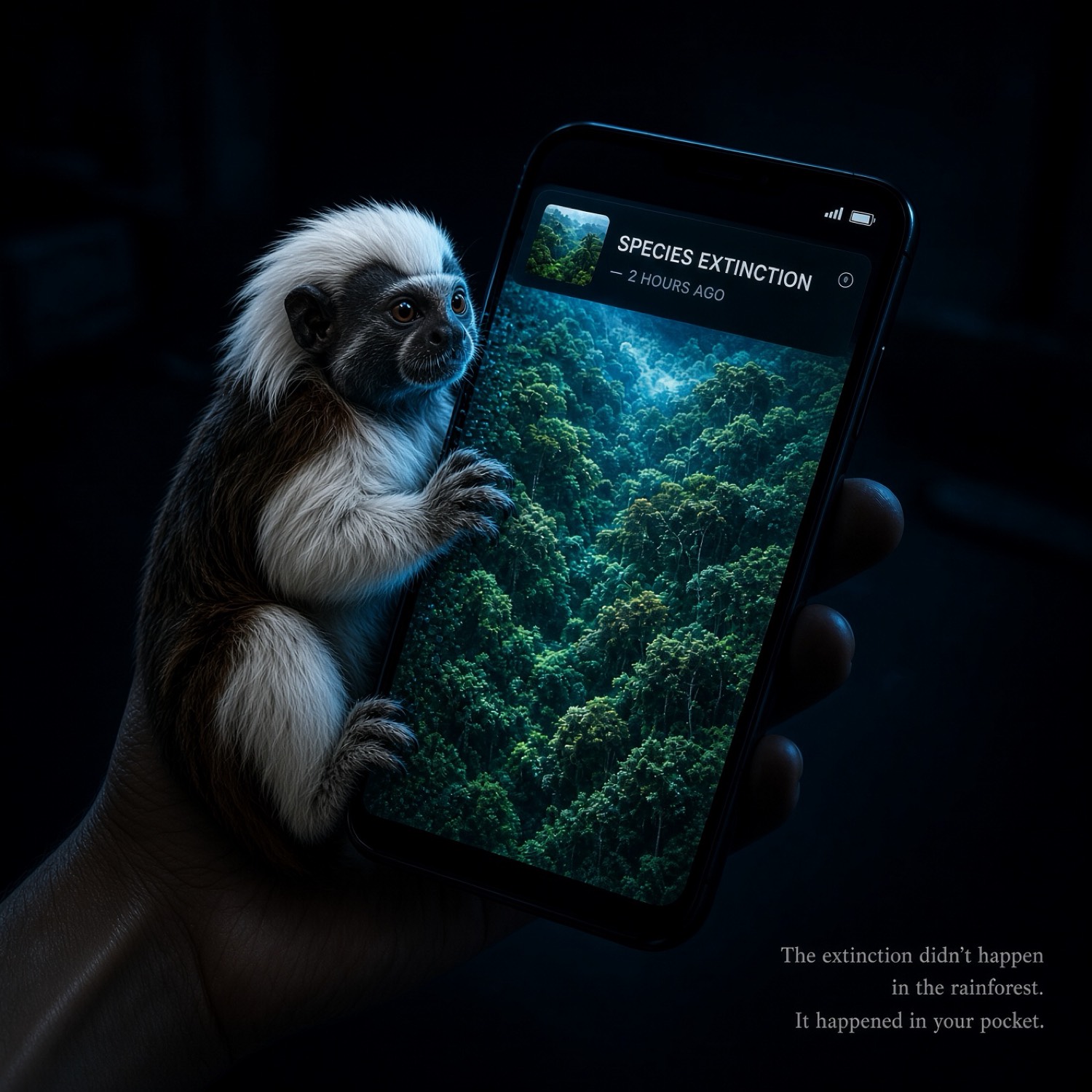
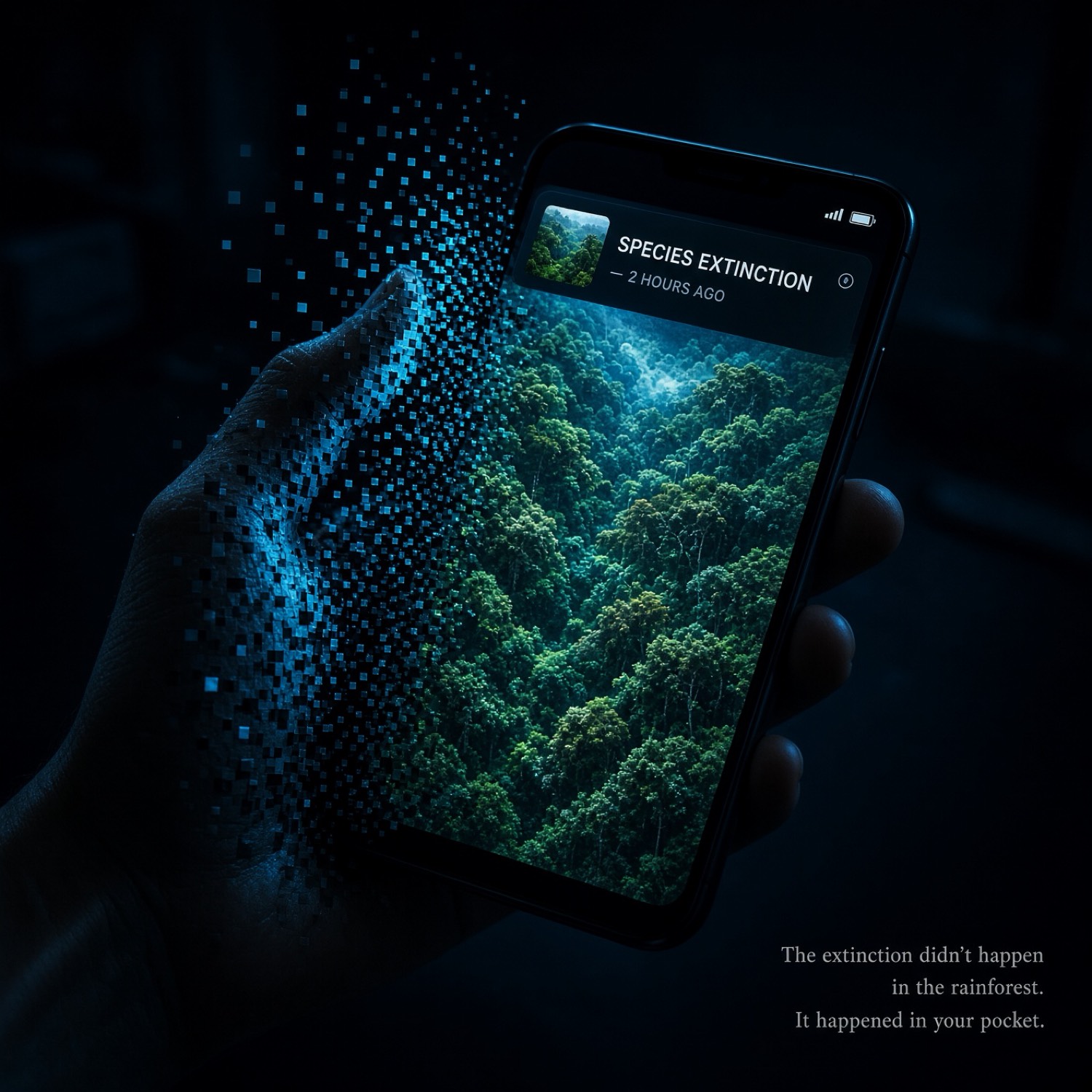
Attention is a habitat.
Listings do not arrive as a daily chime. IUCN publishes assessments in waves; extinctions are confirmed years after the last animal. The cadence is irregular. The neglect is not. Still Here puts the public record — names, status changes, recoveries — where the rest of the feed lives.
The pulse
What moved on the list
45% of migratory birds are now in decline
BirdLife’s State of the World’s Birds, released at the Global Flyways Summit in Nairobi. One in nine bird species is threatened. Wetlands, seas, and forests are the common denominator.
Source: BirdLife International
IUCN Red List 2026-1: 49,505 species threatened
175,909 species assessed. 49,505 in CR, EN, or VU. Amphibians remain the most threatened vertebrate class at roughly 41%. This is a barometer, not a complete inventory — only about 8% of described species have been assessed.
Source: IUCN Red List 2026-1
Cotton-top tamarins: dry forest at 8%, monkeys still on the edge
Proyecto Tití’s next census is pending. The last count put wild numbers under 7,500. Northern Colombia’s tropical dry forest — the only home they have — is a remnant. Former loggers are planting it back.
Source: The Guardian / Proyecto Tití
On the edge
Species to keep in the room

Cotton-top tamarin
Saguinus oedipus
A half-pound primate with a white punk crest, found nowhere else on Earth. Colombia’s dry forest has been cut to a remnant, and tens of thousands of tamarins were exported for labs and the pet trade in the last century.

Vaquita
Phocoena sinus
The world’s smallest porpoise, and the most endangered marine mammal. 2025 surveys found animals still reproducing inside the Zero Tolerance Area — the collapse slowed, it did not reverse.

Amur leopard
Panthera pardus orientalis
The rarest big cat. Camera traps in Land of the Leopard National Park show a slow climb from a few dozen animals — proof that a park with rangers is not a metaphor.

Javan rhinoceros
Rhinoceros sondaicus
The entire species lives in one coastal park next to a volcano. There is no backup population. A wave, a disease, or one determined poacher could end the line.

Axolotl
Ambystoma mexicanum
Famous in tanks, nearly gone in the only lake it belongs to. Captive abundance is not a wild population.

Saola
Pseudoryx nghetinhensis
Discovered by science in 1992, already sliding out of it. Camera-trap photos are rare; no saola has been seen by a biologist in the wild for years.

Kakapo
Strigops habroptilus
A nocturnal, flightless parrot pulled from the edge by a country that decided one species was worth a national project. Every bird has a name.

Northern white rhinoceros
Ceratotherium simum cottoni
Functionally extinct in the wild. The last male, Sudan, died in 2018. Scientists are attempting IVF with southern white rhino surrogates — a last-ditch technology for a subspecies we did not protect in time.
The scorecard is an F for wildlife.
Not because the number is the point. Because the names keep leaving.